Experiencing the Northern Lights in Iceland is one of the most extraordinary natural events in the world. The green, purple, and pink waves of light dance across the sky in complete silence — creating a feeling of mystery, wonder, and connection to nature that is impossible to describe until you see it for yourself.
While the Northern Lights can be unpredictable, travelers often choose private tours because they offer more flexibility, more time under the night sky, and more opportunities to explore remote locations far away from light pollution.
In this guide, we explore everything you need to know about the aurora in Iceland, including the best months, how the lights actually work, common misconceptions, hidden viewing spots, and expert insights that help you get the most out of your night.
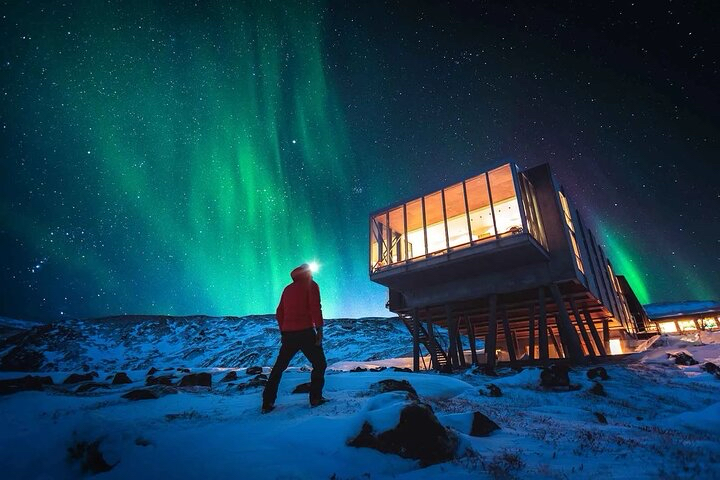
⭐ What the Northern Lights Actually Are
(The short explanation for travelers)
The Northern Lights — or Aurora Borealis — are caused by charged particles from the sun interacting with Earth’s magnetic field. When these particles collide with oxygen and nitrogen in the atmosphere, you see glowing waves of color:
• Green (most common)
• Pink
• Purple
• Red (rare)
Iceland sits perfectly under the “auroral oval,” making it one of the best countries in the world to see the phenomenon.
⭐ When Can You See the Northern Lights in Iceland?
The Northern Lights require darkness, so the season is:
📅 Late August → Mid-April
Here’s a breakdown of how each month feels:
September – October
• Crisp nights
• Beautiful reflections in lakes
• Strong aurora activity
• Mild temperatures (by Icelandic standards)
November – January
• Long, dark nights
• Best visibility
• Snow-covered landscapes
• Sunrise colors mixed with aurora activity at night
February – April
• Clear skies
• Strong solar activity
• Warmer days, cold nights
• Great combination of winter scenery + comfortable weather
Important:
You cannot see the Northern Lights in May, June, July, due to midnight sun.
⭐ Why Many Travelers Prefer Private Northern Lights Tours
A private aurora experience gives you the freedom to explore deeper into the countryside, follow the clearest skies, stay out longer if the lights grow stronger, and avoid crowded spots near Reykjavík.
General reasons people choose private tours include:
• Flexible timing
• Freedom to change locations
• Access to darker viewing areas
• A calmer, more intimate experience
• More time for stargazing and photography
It’s not about luxury — it’s about space, silence, and connection to nature.
⭐ What You Can Expect to See on a Northern Lights Night
Every aurora show is different. On some nights, you see only a faint green arc. On other nights, the sky explodes with movement.
Depending on conditions, travelers may experience:
🌌 Slow-moving arches
A gentle band of green stretching across the sky.
🌈 Fast “dancing” lights
Curtains of color that ripple like waves.
💫 Pillars or rays
Vertical lines shooting upward.
🌠 Multiple colors
Purples and pinks mixed with bright green.
🏞 Reflection auroras
Perfect mirror reflections on lakes or wet sand beaches.
🌒 Stargazing
Clear nights often reveal more stars than many people have ever seen.
A private tour gives you more time to enjoy each phase without rushing.
⭐ Best Areas in Iceland to Watch the Northern Lights
Even though the aurora can appear anywhere, the best viewing locations share one thing: dark, open skies.
These are generally strong regions for aurora hunting:
✔ Þingvellir National Park
Open landscapes, mountains, and minimal light pollution.
✔ Reykjanes Peninsula
Coastal lava fields, cliffs, and dramatic skies.
✔ South Coast countryside
Flat lands with clear horizons and reflections.
✔ Highlands outskirts (when conditions allow)
Scarce lights and huge sky visibility.
✔ Lakes and valleys
Calm water can create stunning mirror effects.
Because private tours are flexible, travelers can reach more secluded areas.
⭐ How to Take Good Northern Lights Photos
(Even with your phone)
📱 For smartphone users
• Use “Night mode”
• Keep the phone very still (lean on a rock or car)
• Increase exposure if possible
• Avoid bright lights before shooting
• Point the camera slightly above the horizon
📸 For DSLR/mirrorless cameras
• Use a tripod
• Manual mode
• ISO 800–3200
• 5–15 second exposure
• Focus to infinity
• Aperture f/2.8 or lower
Pro tip
Auroras usually appear brighter in photos than with the naked eye — don’t worry if your camera sees more than you do.
⭐ Weather, Clouds & Aurora Strategy
One of the biggest misconceptions is thinking the aurora depends on strength alone.
In reality, cloud cover is more important.
Even a strong KP5 storm means nothing under a cloudy sky.
Meanwhile, a weak KP1 can be incredible if the sky is clear.
What private tours are great at is finding clear-sky pockets, because they are free to move.
Good signs include:
• stars visible
• open gaps between clouds
• stillness in the air
• low light pollution
This is why flexibility is everything.
⭐ Common Mistakes Travelers Make
❌ Standing too close to artificial light
Streetlights and car headlights wash out the aurora.
❌ Not waiting long enough
The lights often appear suddenly after hours of silence.
❌ Giving up too early
Some of the best displays happen after midnight.
❌ Not dressing warmly
Standing still in Icelandic winter gets cold fast.
❌ Going to obvious tourist viewpoints
These spots get crowded and may not have the clearest skies.
⭐ FAQs About the Northern Lights in Iceland
Can the Northern Lights be guaranteed?
No — but patience + darkness + clear skies = best chance.
Is it safe to drive on your own at night in winter?
Roads can be icy, windy, or unlit. Many travelers prefer not to drive.
Do the lights happen every night?
Aurora activity happens frequently, but visibility depends on clouds.
What time of night is best?
Typically 9 PM – 2 AM.
Are the lights always green?
Green is most common, but purples, reds, and pinks appear during strong activity.
⭐ Summary: Why a Private Aurora Experience Feels Different
A Northern Lights private experience allows you to:
• escape crowds
• travel deeper into the countryside
• wait longer under the stars
• enjoy a quiet, personal night
• discover hidden dark-sky spots
• adapt to weather, timing, and sky clarity
It’s not just about seeing the lights —
it’s about experiencing Iceland’s night in its purest form.